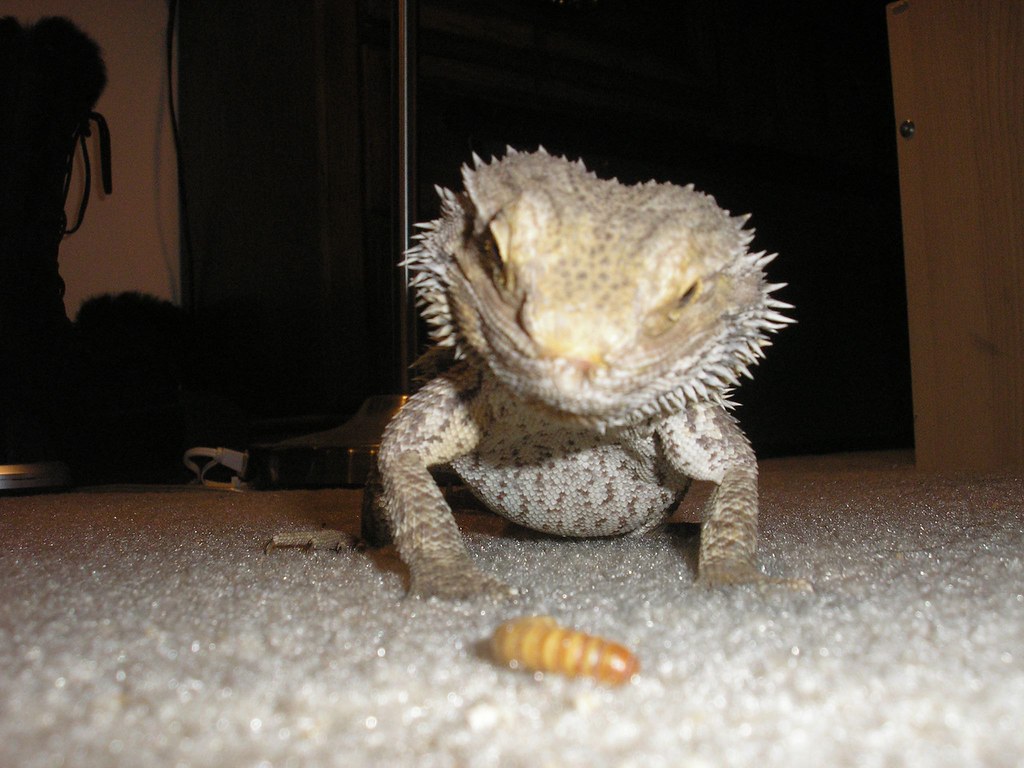
When a normally hungry bearded dragon suddenly turns its nose up at food, it's natural to worry. The good news: appetite loss in beardies is often tied to something fixable in their environment, not a serious illness. Here are the most common reasons — roughly from most to least common — and how to sort out which one you're dealing with.
Brumation
Bearded dragons can enter a hibernation-like state called brumation, usually in cooler months, where they slow down, sleep a lot, and eat little or nothing for weeks. In an otherwise healthy, normal-weight adult, this is normal. Keep fresh water available and check their weight.
Tank temperature and lighting
This is the big one. Beardies rely on heat to digest, and on UVB light for calcium metabolism. If the basking temperature is too low, or the UVB bulb is old or missing (UVB bulbs lose output long before they stop glowing — replace them every 6–12 months), they often stop eating. Check that you have a proper warm basking zone and a cooler end, and that your UVB is current and positioned correctly.
Stress, a new home, or shedding
A recent move, a new tank, handling too soon, or even rearranging the enclosure can cause a temporary appetite dip. Dragons also commonly eat less while shedding. These usually resolve on their own as they settle.
When it's a vet visit
Call a reptile-experienced vet if the dragon is losing weight, is lethargic beyond normal brumation, hasn't eaten for an extended period while temps and UVB are correct, or shows signs of impaction (straining, bloating, no droppings) or parasites. Those need professional care.
Track it
Keeping a simple record of weight, what and when they eat, and your tank's temps makes it far easier to tell "settling in" from "something's wrong" — and gives a vet exactly what they need if a visit becomes necessary. Dial in the habitat first, watch the trend, and most beardies get their appetite right back.
Keep every animal’s health in one place
AniLedger is the all-in-one animal health record — vaccines, meds, vet visits, and history for every species, in your pocket.
Get AniLedger — free to explore →