🪨
Soil & Water Management
Track soil tests, map pH levels, manage composting, schedule irrigation, and monitor water quality for healthier growing.
🧪Soil Testing & Logs
- Navigate to the Progress tab and tap "Soil & Water."
- Tap "+ New Soil Test" to log results from a home kit or lab report.
- Enter pH, nitrogen (N), phosphorus (P), potassium (K), and organic matter percentage.If you have a full lab report, you can also enter micronutrients (calcium, magnesium, sulfur, iron, zinc, manganese, boron), CEC, and base saturation.
- Assign the test to a specific garden bed or zone.
- Review the recommendations panel.Verdix analyzes your soil results and suggests amendments: lime to raise pH, sulfur to lower it, compost for organic matter, bone meal for phosphorus, etc. Quantities are calculated based on your garden size.
💡
Test your soil at least once a year, ideally in early spring before planting. Send samples to your local cooperative extension service for the most accurate results — home kits give a rough estimate.
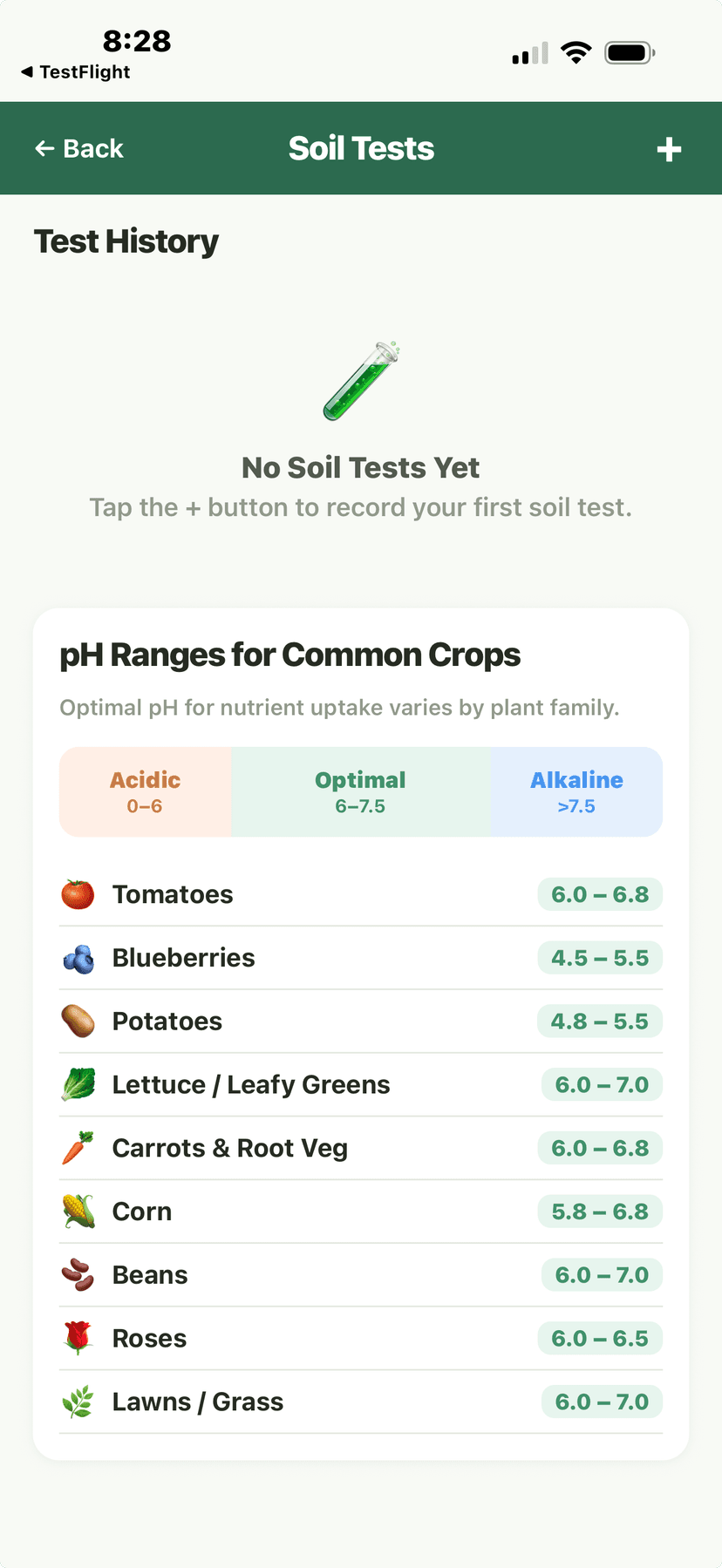
Soil Tests - empty state with pH ranges reference
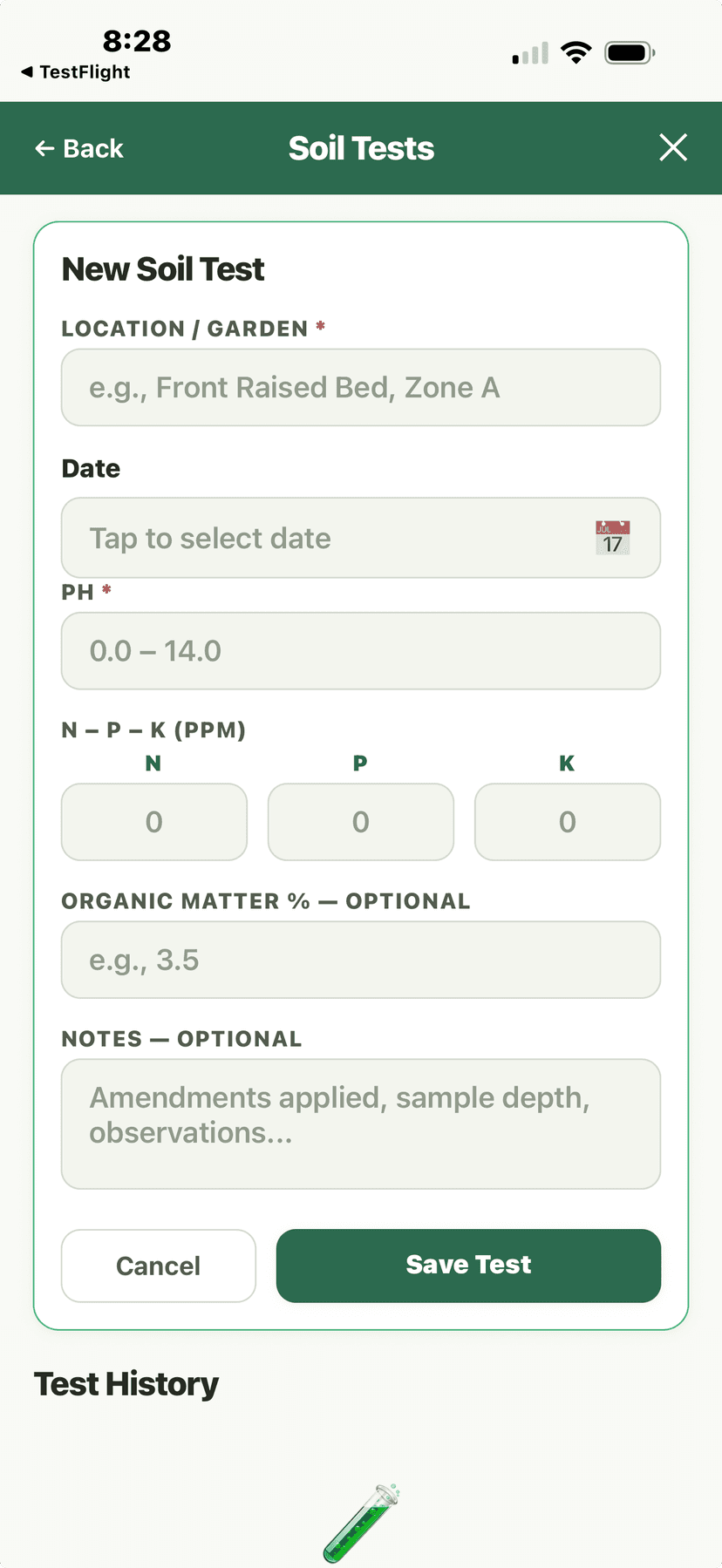
Soil Tests - new test form with location, pH, NPK, organic matter
🗺️pH Mapping
- In the Soil & Water section, tap "pH Map."
- Take multiple pH readings across your garden and pin them on the map.Tap a spot on the garden layout to place a pH reading. The map uses color-coding: red for acidic (<6.0), green for neutral (6.0-7.0), blue for alkaline (>7.0).
- View the spatial pH visualization to identify problem areas.
- Track amendment history and follow-up test results for each zone.
💡
Most vegetables prefer a pH of 6.0-7.0. Blueberries need acidic soil (4.5-5.5), while asparagus tolerates more alkaline conditions (up to 7.5).
Soil Tests - pH ranges reference chart
♻️Composting Tracker
- In Soil & Water, tap "Compost" and then "+ New Pile."
- Select your composting method: Hot Compost, Cold Compost, Vermicompost, Bokashi, or Tumbler.
- Log inputs as you add them.Track brown (carbon) and green (nitrogen) materials. Verdix calculates your C:N ratio and warns if it's out of the ideal 25-30:1 range.
- Log temperature readings for hot compost piles.The ideal hot composting temperature is 130-160°F. Verdix charts your temperature over time and tells you when to turn the pile.
- Mark milestones: turned, moisture added, finished, screened, and applied.
💡
A balanced C:N ratio is the key to fast composting. If your pile smells bad (too much nitrogen/green), add brown materials like dried leaves or cardboard. If it's not heating up, add green materials like grass clippings or kitchen scraps.
Soil Tests - new test form for compost and soil analysis
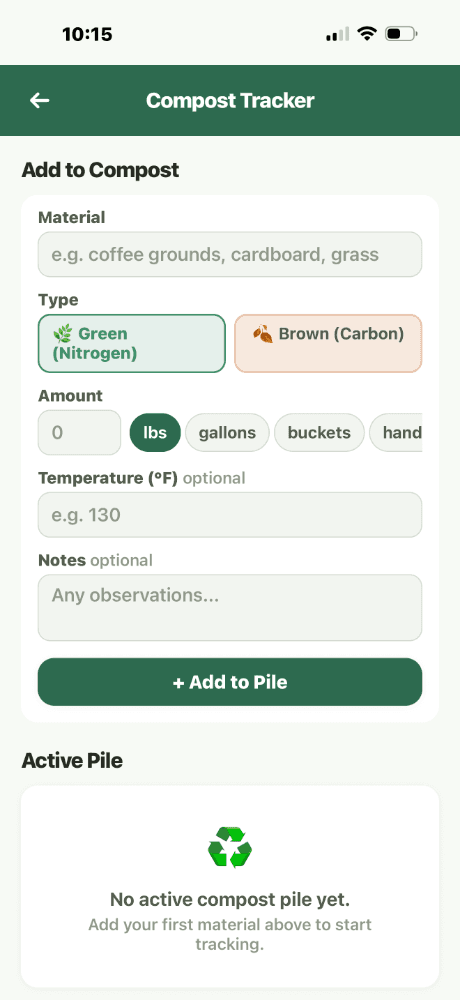
Compost Tracker - Add to Compost form with Material, Type green/brown toggle, Amount with unit options, Temperature, Notes
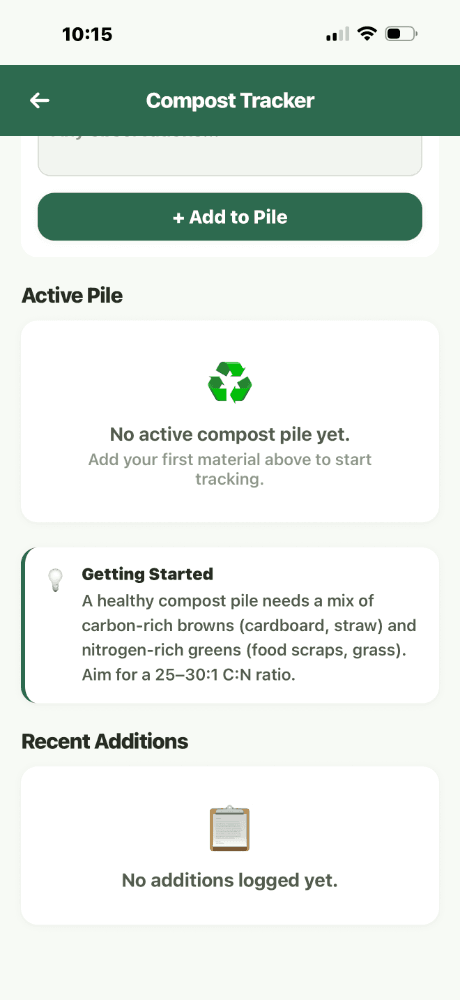
Compost Tracker scrolled - Active Pile empty state, Getting Started tip about C:N ratio, Recent Additions
💧Irrigation Scheduling
- In Soil & Water, tap "Irrigation."
- Set up your irrigation system type: drip, sprinkler, soaker hose, hand watering, or smart controller.If you use a Rachio or Orbit smart controller, Verdix can integrate directly to show run times and adjust schedules.
- Configure watering zones that match your garden beds.
- Enable weather-adjusted scheduling.Verdix reduces or skips watering after rainfall and increases watering during heat waves and drought periods. The adjustment is based on evapotranspiration (ET) calculations.
- Track water usage over time in the Water Log.Log gallons used per watering session. Verdix calculates cost per garden bed based on your local water rate.
💡
Deep, infrequent watering is better than shallow, frequent watering for most plants. It encourages deeper root growth and more drought-resistant plants.
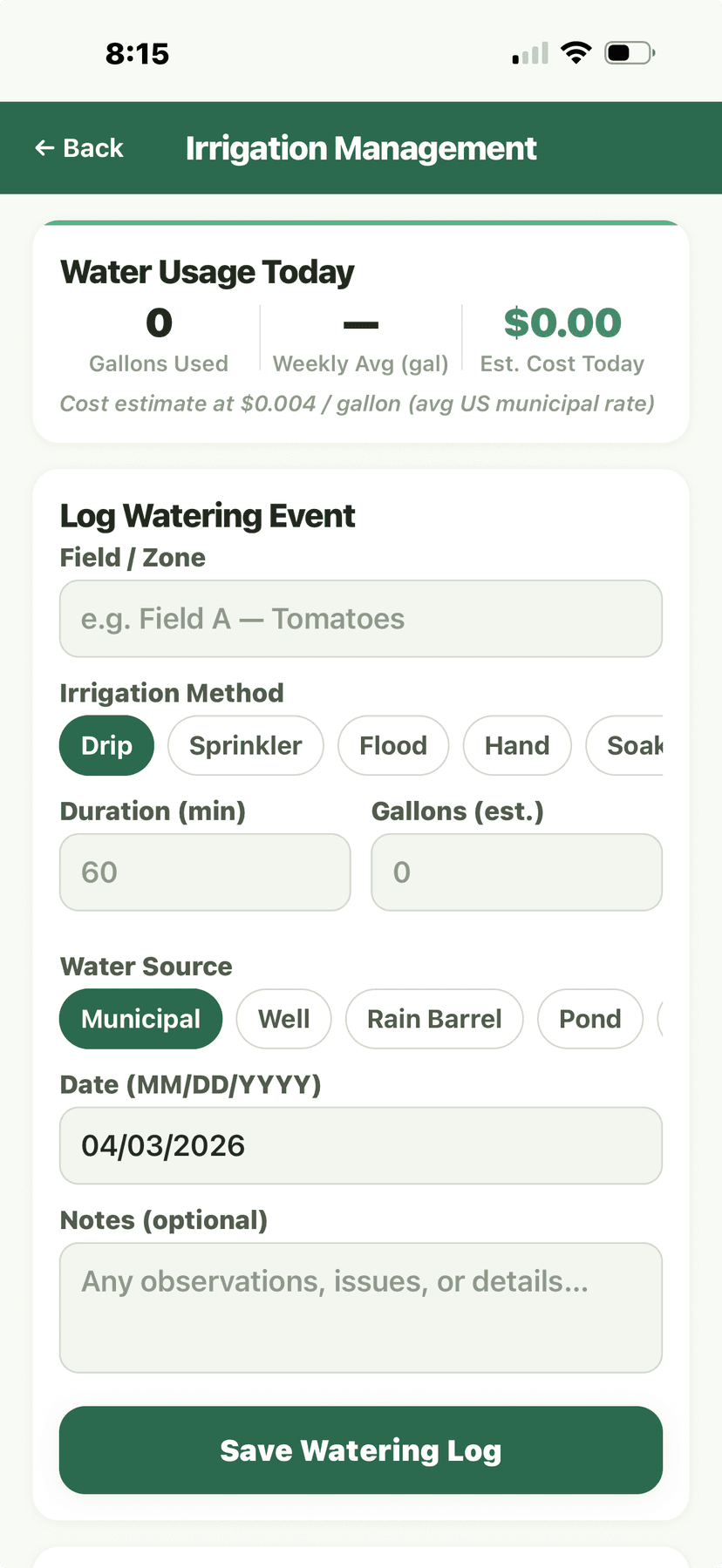
Irrigation Management - water usage and log watering form
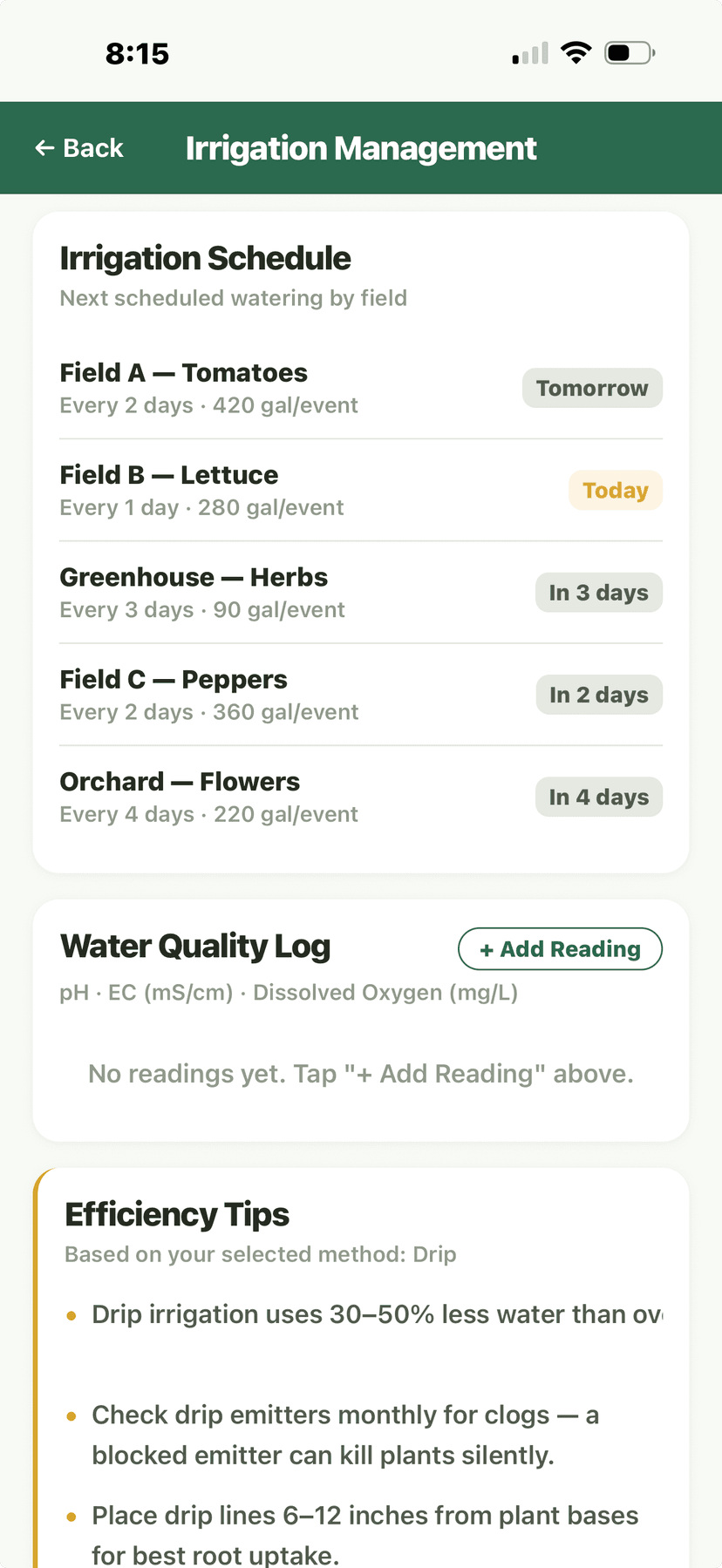
Irrigation - schedule, water quality log, and efficiency tips
🔬Water Quality Testing
- In Soil & Water, tap "Water Quality."
- Log water test results: pH, EC (electrical conductivity), dissolved oxygen, alkalinity, and hardness.
- View crop-specific alerts when water quality parameters are outside the ideal range.For example, high alkalinity water can gradually raise soil pH. High EC water can stress salt-sensitive crops.
- Track well or municipal water quality over time to spot trends.
💡
If you're on well water, test at least annually. Municipal water users should check their annual water quality report — chloramine levels can affect soil biology.
Irrigation - water quality log and efficiency tips